A place of remembrance
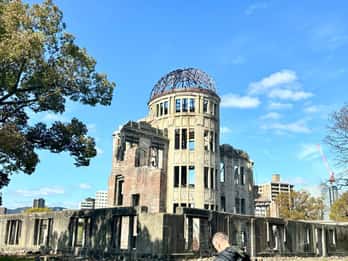
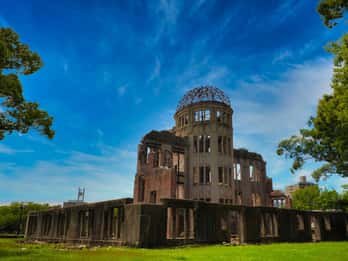
The park and the Peace Memorial Museum remember the people killed by the atomic bomb on 6 August 1945 and those who died of its effects later. Across the river from the northern tip of the park stands the Atomic Bomb Dome, the remains of the Hiroshima Prefectural Industrial Promotion Hall, built in 1914 and left as it was after the explosion. UNESCO listed it as the Hiroshima Peace Memorial in 1996.
The museum shows personal belongings, photographs and the accounts of survivors. Many adults find the visit hard. With children, read about the exhibition first and decide together how much of it they see; the park and the Dome outside are easier to explain.
How the guided tours differ
The walk by Localized Walking, Bike & Food Tours takes two and a half hours, is guided in English and is listed as wheelchair accessible. Its title puts one question at the centre: why the atomic bomb was dropped on Hiroshima. Reviewers mention a guide who knows the history in depth, time for photos and breaks in the shade on hot days. Two guests wrote that part of the route covers modern Hiroshima rather than the bombing itself; read the itinerary on the booking page if the history is all you came for.
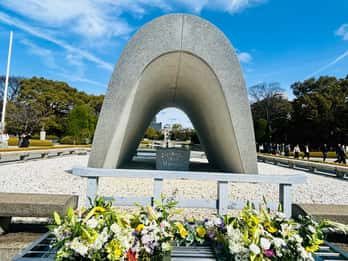
M2N Tours starts at the Gates of Peace, next to the stop of bus 24 from the south exit of Hiroshima Station, and ends at the hypocenter. On the way the group stops at the Cenotaph, the Flame of Peace, the Children's Peace Monument, the Korean Atomic Bomb Victims Cenotaph, the Peace Bell and the Dome, and goes inside the Hiroshima National Peace Memorial Hall for the Atomic Bomb Victims. The operator says its guides studied peace studies, history, culture or tourism, and lists live guides in several languages, among them French, Hindi and Ukrainian.
The group tour by F and five takes two hours and is the one that includes a ticket for the Peace Memorial Museum, together with the park and the Dome.
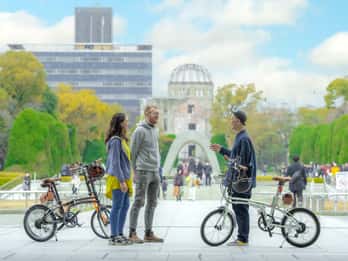
The Peace Cycling Tour by Attractive JAPAN starts at the Rest House in the park, with groups of up to ten on rental bikes. The two-hour course rides out to A-bomb heritage sites beyond the park, among them a tram that survived the bombing; the three-hour course adds Hiroshima Castle, the Red Cross Hospital and a weeping willow that survived. Adult e-bikes need a height of 145 cm, and children's bikes and child seats are limited, so ask before booking with children. One guest reported that the group walked instead of cycling in heavy rain.
The tours and the museum
Apart from the F and five tour, the product pages do not list museum entry, so plan the museum as a separate visit before or after. The museum opens at 7:30 and closes at 18:00 in winter, 19:00 in spring and autumn and 20:00 in August, with last entry half an hour before closing. The first hour of the day and the last hour before closing are reserved for visitors with a web ticket bought in advance, and web tickets can sell out. Around midday it is at its fullest, and staff may hold back entry for a while. A morning walk with the museum in the afternoon, or the other way round, avoids the busiest hours.
6 August and the summer
Each year on 6 August the city holds the Peace Memorial Ceremony in the park. The museum opens longer that day and is very full. In July and August the heat is a factor on any walking tour; one reviewer noted the guide taking regular breaks in the shade.
In spring
About 300 cherry trees line the river along the park. In 2026 the first blossoms in Hiroshima opened on 19 March and the best days in the park began around 29 March. The season page has the details for spring and autumn.
Adding Miyajima
The walk leaves the afternoon free. Miyajimaguchi is about 25 minutes from Hiroshima Station by JR train, and a direct boat leaves from the Motoyasu pier next to the park. For a guided island visit, the Miyajima half-day tour starts at Miyajimaguchi. If you want both sites in one guided day, the day tours from Hiroshima Station include the park and the museum.